Pest Control
Understanding Rodent Hantavirus
|
3
min read
Beyond the Bite: Understanding Rodent Hantavirus
Reports from the SCMP indicate that local health officials are currently looking into a new human infection of rat hepatitis E, marking the city's first instance this year. With an increasing trend of local cases identified this season, it is essential for the community to understand the risks associated with Hantavirus.
1. What exactly is Hantavirus?
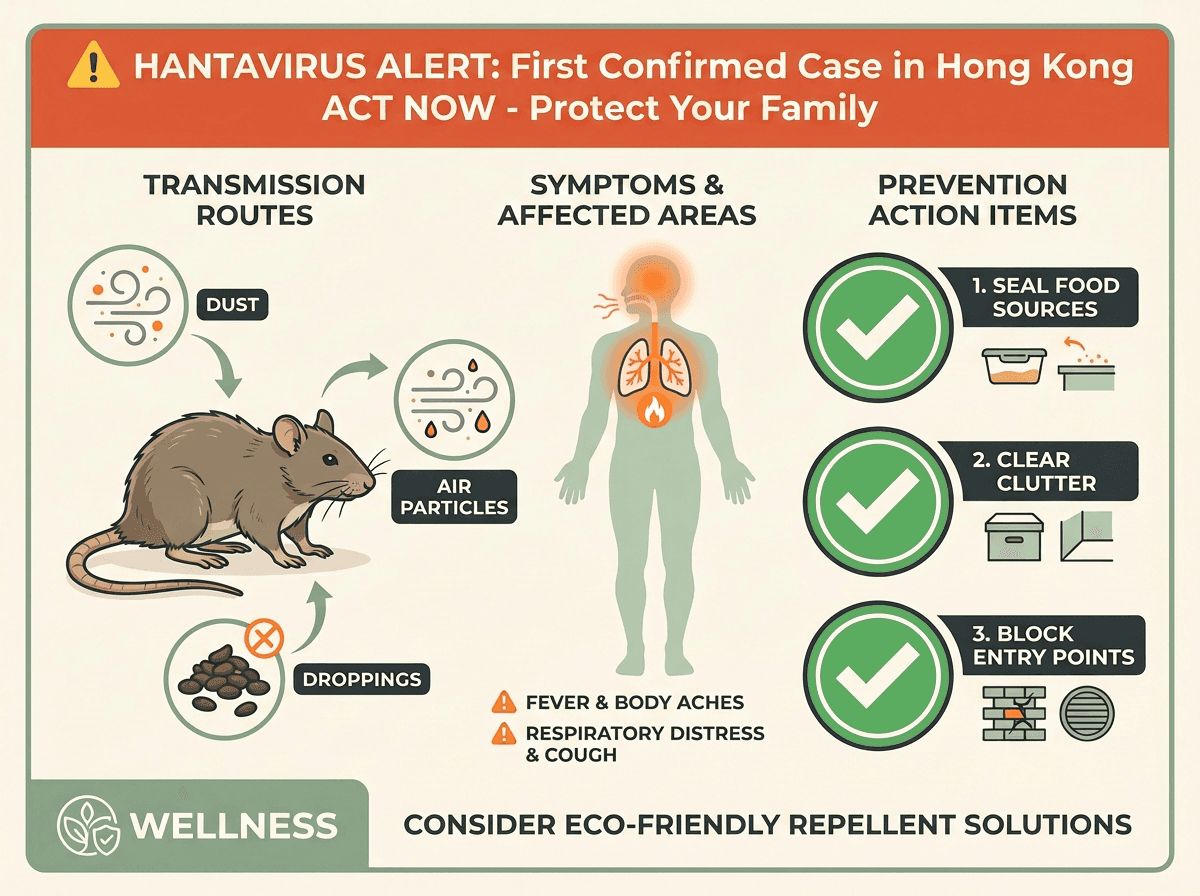
Hantaviruses are a group of viruses primarily found in rodents. Unlike many other viruses, they don't need a "middleman" like a mosquito to infect humans. In Asia, including Hong Kong, the most common form is Hemorrhagic Fever with Renal Syndrome (HFRS).
How does it reach you?
Aerosolization: Inhaling dust contaminated with rodent urine, droppings, or saliva (the most common route).
Direct Contact: Touching contaminated surfaces and then touching your eyes, nose, or mouth.
Bites: Though rare, an infected rodent bite can transmit the virus directly.
2. Symptoms: Know the Red Flags
Hantavirus can be tricky because its early stages often mimic a common flu or even Dengue Fever. However, the progression is what makes it dangerous.
Stage | Common Symptoms | Potential Complications |
Early Phase | High fever, chills, severe back & abdominal pain, headache. | Nausea and vomiting; often mistaken for food poisoning. |
Late Phase | Sudden low blood pressure (shock), blurred vision. | Acute Kidney Failure and internal bleeding. |
3. Hong Kong Prevention: The "Three-No" Strategy
In a densely populated city like Hong Kong, rodent control is a community effort. At Ola Tech, we advocate for a proactive approach to keep your home a "No-Rodent Zone."
I. No Food for Rats
Seal it up: Store all dry goods and pet food in thick plastic or metal containers. Rats can easily chew through cardboard.
Garbage Management: Use bins with tight-fitting lids and dispose of trash every night. Never leave food waste in rear lanes or balconies.
II. No Entry for Rats
Seal the Gaps: Check for holes near pipes, floor drains, and air conditioning units. A rat can squeeze through a hole the size of a 2-dollar coin.
Check High & Low: Remember, rats are excellent climbers. Check false ceilings and roof areas as frequently as ground-level drains.
III. No Shelter for Rats
Declutter: Avoid stacking old newspapers or cardboard boxes in storerooms; these are perfect nesting materials.
Clean Smart: If you find droppings, do not sweep or vacuum them—this kicks the virus into the air. Instead, use the "Wet Method":
The Safe Cleaning Protocol:
Wear a mask and gloves.
Spray the area with 1:49 diluted bleach.
Let it soak for 5 minutes.
Wipe it up with a paper towel and dispose of it in a sealed bag
With the increasing number of rat infestations in our neighbourhood, we notice that the traditianal catching method is not working as rodents are getting smarter everyday.
It’s recommended to purchase related items to protect your home and family. PetalGard uses natural and scientifically proven ingredients that can reduce more than 80% of rat invasion.